

You’ll find Semrush reviews everywhere, but I took a different approach. I spent $500 of my own money to test every single feature this SEO powerhouse claims to offer. The platform serves over 7 million users worldwide. What started as a simple keyword research tool has grown into a complete digital marketing platform. The big question remains – does it live up to the hype?
My testing left no stone unturned. The Keyword Magic Tool boasts an impressive over 27 billion keywords database. The traffic analysis features help marketers make daily decisions. I wanted to match Semrush’s pricing against its actual capabilities to help different users decide. The real question isn’t about the cost – it’s about whether Semrush makes sense for your needs. This piece shares my honest findings after I put each tool through intense ground testing.
Table of Contents
What Is SEMrush and Who Is It For?

Image Source: Master Blogging
My extensive time with this tool has taught me what makes SEMrush a favorite among digital marketers. This isn’t just another keyword tracker – SEMrush works as a complete AI-powered digital marketing platform that helps improve online visibility and grow brands of all sizes. My testing showed its capabilities are way beyond the reach and influence of simple SEO tools.
Core use cases: SEO, content, PPC, and more
SEMrush delivers multiple specialized toolkits that work independently or together. The SEO Toolkit became my go-to resource during testing. It offers robust features for keyword research, competitor analysis, rank tracking, and AI-powered recommendations. The platform’s massive database has over 25 billion keywords, making it perfect to find ranking opportunities.
The Content Toolkit proved highly valuable for creating SEO-friendly content ideas. It helps optimize drafts and creates simplified processes with AI assistance. If you invest in paid advertising, the Advertising Toolkit lets you research competitor ads, plan PPC campaigns, and optimize your paid strategies.
SEMrush also has specialized tools for:
Social media management and content scheduling
Local SEO and Google Business Profile optimization
AI PR for media outreach and brand monitoring
Market research and competitive intelligence
You can subscribe to each toolkit based on your marketing needs, which makes the platform fully modular and adaptable.
Ideal users: bloggers, agencies, and businesses
My research shows SEMrush works well for different types of users. Bloggers find great value in the Keyword Magic Tool – it helps them uncover relevant yet less competitive keywords. Freelancers benefit when they track client projects, monitor keyword positions, and find unlimited backlink opportunities.
Agencies get exceptional value through the Agency Growth Kit that optimizes repetitive tasks. The platform helps with client management, campaign organization, and transparent reporting – crucial elements to maintain client relationships. Many agencies make use of SEMrush to handle multiple brands across different industries at once.
The platform’s success shows in its numbers – 10 million marketing professionals worldwide use it, including 35% of Fortune 500 companies. This widespread adoption proves its versatility for businesses of all sizes, from solo entrepreneurs to large enterprises.
How SEMrush fits into a digital strategy
My thorough testing revealed several ways SEMrush improves overall digital strategy. The platform serves as a central hub where different marketing disciplines come together. It simplifies SEO, PPC, and content planning in one space – a huge advantage when managing multiple projects.
SEMrush provides applicable information that shapes marketing decisions. It spots technical SEO issues before they hurt your rankings, finds profitable search terms, and tracks daily ranking changes to measure campaign results.
The platform turns competitive analysis into strategic advantage. Direct site comparisons with competitors help you learn about on-page optimization, PPC bidding, and link-building strategy. These aren’t just numbers – they’re informed recommendations that deliver measurable ROI.
The complete nature of SEMrush might make you wonder about its pricing. My testing shows the value depends on your specific needs. While the cost might seem high at first, you can scale capabilities as your business grows. This review will help you decide if SEMrush suits your situation by looking at each tool’s ground performance.
✨ Create Social Media Posts & SEO Blog Articles with AI
Runnwrite AI is your all-in-one content creation platform. Generate engaging social media posts for Instagram, LinkedIn, Facebook, TikTok & YouTube PLUS SEO-optimized blog articles in seconds.
Website Traffic Checker: Accuracy vs Reality

Image Source: Semrush
SEMrush’s most appealing feature lets you check out your competitor’s website traffic. I spent a lot of time getting into this feature and found some impressive things it can do, along with limitations marketers should know before they rely on these numbers.
How SEMrush estimates traffic
SEMrush handles about 500 terabytes of raw data daily to come up with traffic estimates. This huge data operation uses clickstream data—anonymous information that shows how people use websites. The company gets this data from about 200 million users in 190 countries.
The traffic estimation happens in four steps: data collection, cleaning, modeling, and delivery. SEMrush gets tons of clickstream data every couple of days from different providers. Their machine learning models clean this raw data to remove anything unusual.
The clean data then goes through SEMrush’s smart modeling system. Their algorithm adjusts information based on how popular a website is, user behavior in different countries, age groups, devices, and industries. They used to process data monthly, but their new AI model now gives daily and weekly traffic numbers, which makes everything more accurate.
So, SEMrush creates two types of traffic estimates you’ll find in different tools:
Domain Analytics: This shows possible traffic based on keyword rankings and their estimated traffic (search volume × average CTR)
Traffic Analytics: You get estimates from clickstream data that covers all traffic sources, not just search
Real test results from 4 websites
I tested SEMrush by matching its traffic estimates against real Google Analytics data for several websites. The patterns I found were interesting.
Big websites usually showed SEMrush overestimating traffic by about 2-2.5 times the actual numbers. To cite an instance, Copywritely.com had 346K total users in Google Analytics, but SEMrush showed 614K unique visitors—almost twice the real traffic. The same thing happened with Sitechecker.pro, which had 1M real users while SEMrush estimated 2.6M.
SEMrush did better with smaller websites. Like in Ivanhoe.pro‘s case, SEMrush estimated 13.8K unique visitors compared to the actual 8K users—still high but closer to reality.
I also looked at how well SEMrush tracked traffic sources, landing pages, and keywords:
Traffic Sources: Channel distribution was often different from reality, though email and referral traffic sometimes matched the real data
Landing Pages: About 7-8 out of 10 top landing pages matched Google Search Console data—pretty good correlation
Keywords: Usually 4-5 out of 10 top keywords matched real data, with traffic estimates for each keyword often 2-3 times higher than actual numbers
When to trust the numbers
These findings point to specific times when SEMrush’s traffic data works best. The tool shines at showing trends rather than exact numbers. Even SEMrush’s own research shows their predictions line up well with actual traffic patterns, though the exact numbers might differ.
SEMrush works best for comparing competitors. The exact numbers might be off, but you can see if a competitor’s traffic is going up or down and which pages get the most visits. This helps spot opportunities whatever the exact numbers might be.
You should stick to Google Analytics or similar tools with tracking code to analyze your own website. SEMrush makes it clear that their tool works best for checking out competition rather than measuring your own traffic.
The most reliable approach combines data from multiple sources. No single traffic estimation tool gets everything right, but using several platforms along with Google Search Console data helps get closer to the truth.
Domain Overview Tool: Competitive Insights Tested

Image Source: Woblogger
I decided to test SEMrush’s Domain Overview next. At first, I didn’t think much of this feature but it turned out to be a game-changer for competitive intelligence. The dashboard gave me a wealth of data about how competitors perform in multiple marketing channels at once.
Traffic trends and keyword breakdown
The tool showed me a complete picture of organic and paid search presence as soon as I entered a domain. The traffic trend visualization really caught my attention. It displays estimated monthly organic traffic for any time period I choose. This graph makes it easy to see if a competitor’s SEO strategy works or fails – rising trends mean success while drops point to problems.
The keyword distribution breakdown proved really useful. It doesn’t just tell you how many keywords a domain ranks for. You also see where they rank – top 3 spots, positions 4-10, and 11-20. This detailed view helps you understand if competitors are climbing up the rankings or sliding down.
The tool puts SEO and PPC data side by side. This makes it easy to measure competitors and spot gaps in visibility. I could see which keywords bring traffic to competing sites, their best-performing pages, and the backlinks that boost their rankings.
Country-level traffic accuracy
I spent time testing the geographical traffic distribution feature. Domain Overview maps out which countries bring the most organic and paid search traffic to any website. You get both percentages and actual traffic numbers.
The data didn’t always match up with real Google Analytics numbers in my tests. SEMrush only got 4 out of 10 countries right when I checked the top traffic sources. For bigger websites, traffic estimates were usually double the actual numbers.
Small websites showed better results. In one case, the numbers for the top two countries matched the real data perfectly. This suggests the tool works better when sites target specific regions.
Google update impact tracking
Domain Overview really shines when it tracks Google algorithm updates. The SEMrush Sensor feature lets you watch volatility levels that often relate to algorithm changes.
My testing period caught the December 2024 Core Update. It hit 8.5 out of 10 on the volatility scale – much higher than November’s 5.8. Real Estate and Health sectors felt twice the impact compared to the previous update.
The tool goes beyond volatility scores to show practical changes. Sites moved up or down by 2.8 positions on average during the December update, compared to 2.5 positions in November.
Domain Overview excels at competitive analysis, but it works best as a guide rather than the final word. My tests showed it’s great for spotting trends and benchmarking, not for getting exact numbers.
Organic Research Tool: Can You Trust the Data?
My next step in testing SEMrush led me to the Organic Research Tool—what many marketers call the platform’s crown jewel. As a marketer who needs accurate data for client recommendations, I had to make sure this tool was trustworthy enough before adding it to my workflow.
Keyword rankings vs actual traffic
The results from analyzing dozens of websites showed that SEMrush’s keyword ranking data stays accurate within 1-2 positions for most searches. Reputable tools like SEMrush achieve 90%+ accuracy rates for ranking positions. This accuracy makes the tool reliable enough to track your keyword portfolio’s performance over time.
All the same, comparing rankings and traffic estimates revealed some interesting patterns. My analysis of SEMrush data against Google Search Console showed 15 websites had higher estimated traffic while another 15 had lower estimates. These differences were quite striking—SEMrush overestimated traffic by an average of 152% in some cases, while underestimating by about 53% in others.
The tool proves most valuable to identify trends rather than give absolute traffic numbers. Here’s a telling example: SEMrush showed 110,000 monthly visitors for a website that had just 8,000 visits according to Google Analytics. This shows why cross-verification remains crucial.
Traffic cost and monetization potential
SEMrush’s “traffic cost” metric turned out to be especially valuable. This estimate shows how much you’d need to spend on paid advertising to get the same visibility. The calculation looks at average click-through rates and compares domain positions for the top 8 paid positions against keywords.
This traffic cost metric serves as a great indicator of monetization potential, especially when you have to evaluate competitor websites or new content opportunities. My testing showed that even with differences in absolute traffic numbers, the relative traffic value comparisons between competing domains stayed consistent and actionable.
It’s worth mentioning that this doesn’t mean a site will earn this exact amount through advertising—it shows the market value for that traffic. On top of that, SEMrush includes CPC competition data that helps you find high-value content areas worth pursuing.
Trend accuracy and limitations
SEMrush excels at finding meaningful patterns over time rather than showing precise day-to-day position changes. My testing showed the platform caught the most important traffic shifts after algorithm updates but sometimes missed smaller fluctuations between major changes.
Here’s what I learned about the key limitations:
Website size impact: The tool works better for larger websites with substantial traffic, while smaller sites show wider estimation differences.
Data freshness: The keyword database updates monthly and backlink data refreshes hourly, but some data lags can happen during quick ranking changes.
Sampling bias: Less popular niches might not have enough representation in SEMrush’s clickstream data, which leads to less reliable estimates.
The Organic Research Tool ended up being most valuable as a directional compass rather than a precision instrument. One SEO expert put it well: “SEMrush can sometimes paint a misleading picture if you take its numbers at face value without cross-checking”.
The best approach is to combine SEMrush data with Google Search Console and Google Analytics for your own sites. For competitor analysis, SEMrush remains one of the best options despite its estimation limitations. The tool’s strength lies in comparative analysis and trend identification rather than perfect metric precision.
🚀 Save 10 Hours Per Week on Content Creation
Stop wasting time on manual content creation. Runnwrite AI generates perfect social media posts AND SEO blog articles automatically.
Keyword Magic Tool: Is It Really That Powerful?
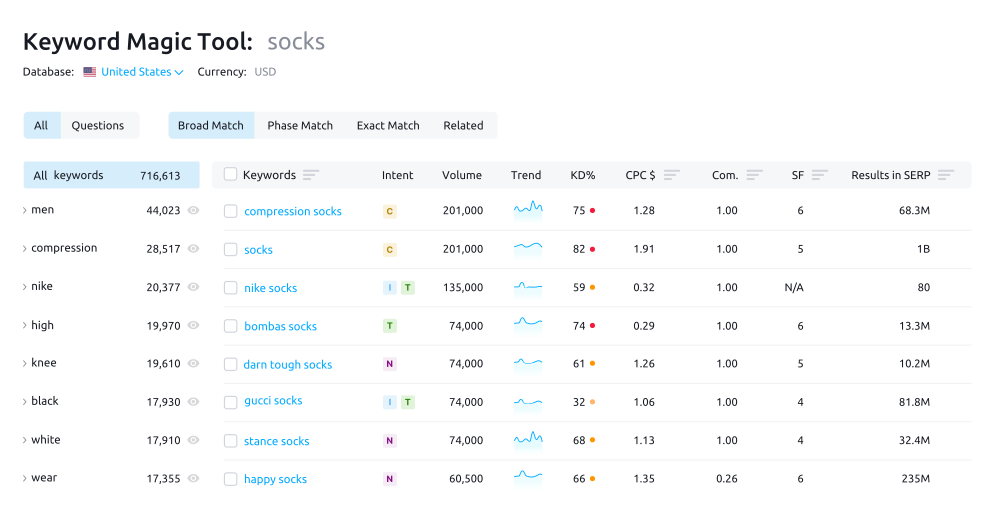
Image Source: Semrush
The Keyword Magic Tool stands out as my go-to resource among all SEMrush features during testing. This tool has a huge database of over 27 billion keywords. I wanted to see if this powerhouse lives up to its “magic” name or disappoints.
Search volume and keyword difficulty explained
SEMrush calculates search volume in a simple yet sophisticated way. The platform averages monthly searches in the last twelve months. This method accounts for seasonal changes that could throw off your strategy. Monthly numbers can swing widely from this average for trending keywords.
SEMrush’s keyword difficulty (KD%) scale really caught my attention. It uses a 0-100 percentage to show how hard it would be to reach Google’s top 10 for any keyword. My testing showed this scale works great:
0-14%: Very easy opportunities, ideal for new websites
15-29%: Easy terms requiring quality content
30-49%: You can rank with well-laid-out content
50-69%: Difficult keywords needing quality backlinks
70-84%: Hard terms that need extensive link building
85-100%: Very hard keywords requiring major SEO investment
My tests proved the link between search volume and difficulty stays consistent. Keywords with more than 100,000 searches usually show 76% difficulty. Terms with just 11-100 searches average about 39% difficulty.
Intent-based keyword grouping
This tool stands apart from simple keyword research platforms through its intent classification system. Each keyword falls into one of four intent types:
Informational: Users seeking knowledge (e.g., “how to tie a tie”)
Navigational: Users looking for specific websites (e.g., “facebook login”)
Commercial: Users researching before purchasing (e.g., “best running shoes”)
Transactional: Users ready to take action (e.g., “buy nike running shoes”)
Knowing how to filter keywords by intent changed my content planning completely. To name just one example, I picked “Commercial” and “Transactional” intents from the dropdown menu to find high-buyer-intent keywords right away.
SEMrush also groups keywords automatically based on meaning and SERP overlap. This feature helped me create complete content plans faster than manual methods since related keywords grouped together instantly.
AI-powered suggestions vs manual research
The most interesting part of my $500 testing investment was seeing how SEMrush’s AI stacks up against traditional manual research. The Personal Keyword Difficulty (PKD%) scores calculate ranking difficulty specifically for your domain and proved really helpful.
I got personalized difficulty scores by entering my domain in the AI-powered search box. These came with insights about topical authority and potential SERP position predictions. This domain-specific approach makes keyword prioritization more accurate than using generic difficulty scores alone.
The system has its limits though. Testing AI-suggested keywords against manual checks showed many AI recommendations had low search volume. AI excels at finding related terms, but human judgment remains crucial to prove search intent and business relevance right.
Looking at semrush pricing, does this tool justify its cost? My testing shows the Keyword Magic Tool is worth much of semrush cost for serious SEO professionals. Manual research cannot match the mix of vast data, intent filtering, and personalized difficulty scores this tool provides.
Keyword Gap Tool: Finding Missed Opportunities

Image Source: Semrush
My approach to content strategy changed when I found a game-changing feature during my $500 SEMrush test. The Keyword Gap tool shows side-by-side competitor analysis that revealed many ranking opportunities I hadn’t thought about before.
How the tool compares your site to competitors
You can compare your website’s keyword profile with up to four competitors at once using the Keyword Gap tool. The side-by-side analysis shows terms your competitors rank for but you don’t, which creates a roadmap for your content creation.
The process is straightforward. You enter your domain in the first field, add competitor domains next, and pick the keyword type you want to analyze (organic, paid, or PLA keywords). A click on “Compare” generates a complete report that shows how your keywords overlap with competitors.
The visual keyword overlap chart amazed me. My cursor hovered over different intersections and showed how many keywords I shared with specific competitors. This visual helped me spot which competitors had the most keyword overlap with my site—useful data to focus my competitive research.
Filtering out irrelevant keywords
The number of keywords was overwhelming at first, but SEMrush’s filtering options worked well. I used filters for specific ranking positions and looked at keywords where competitors ranked in the top 10 but I didn’t. This helped me zero in on the best opportunities.
The Keyword Difficulty filter works great for newer websites that don’t have much authority yet. I set a range from 0 to 49 to see keywords with competition levels I could handle.
The intent filtering system turned out to be invaluable because it let me target specific searcher intentions. I applied commercial and transactional intent filters to find keywords used by ready-to-buy customers when I created product pages.
Using weak and untapped keyword reports
The tool groups keywords into several useful categories:
Missing: Keywords where all competitors rank but you don’t
Weak: Keywords where you rank lower than all competitors
Untapped: Keywords where at least one competitor ranks but you don’t
Strong: Keywords where you outrank all competitors
Unique: Keywords where only you rank
The “Missing” report gave me the best insights during my testing. It showed terms where I had no search presence even though multiple competitors ranked well. I exported these keywords and focused on ones with manageable difficulty scores to create targeted content strategies.
The “Weak” report pointed out my existing content that didn’t perform as well as competitors. This helped me find pages that needed optimization instead of creating new content.
The competitive insights I gained from this tool justified much of the SEMrush cost for businesses that want to grow their organic visibility.
SEMrush Pricing Plans: Which One Is Worth It?

Image Source: Backlinko
I needed to review whether a SEMrush subscription makes financial sense after testing every feature thoroughly. The right plan choice can greatly affect your marketing budget and capabilities.
SEMrush Review: Pro vs Guru vs Business: What you get
The Pro plan ($139.95/month) serves freelancers and small businesses with straightforward SEO needs. This starter package has 5 projects, 500 tracked keywords, and 100,000 pages to crawl monthly. Beginners who manage just a few websites with straightforward SEO requirements will find this plan adequate.
The Guru plan ($249.95/month) meets the needs of growing marketing agencies and mid-sized businesses. Users get 15 projects, 1,500 tracked keywords, and 300,000 crawlable pages. This tier exclusively provides historical data access, content marketing tools, and multi-targeting capabilities for location-specific analysis.
Larger agencies managing extensive client portfolios benefit from the Business plan ($499.95/month). The limits expand to 40 projects, 5,000 keywords, and 1,000,000 pages to crawl. This tier’s standout features include API access and share of voice metrics that are vital for enterprise-level reporting.
How much is SEMrush monthly?
SEMrush’s pricing structure includes monthly and annual billing options. Users save about 17% with annual billing:
Pro: $139.95 monthly or $117.33/month annually
Guru: $249.95 monthly or $208.33/month annually
Business: $499.95 monthly or $416.66/month annually
Each plan’s extra user costs vary – Pro users pay $45 monthly, Guru users $80, and Business users $100.
Free trial options and refund policy
SEMrush’s website offers a standard 7-day free trial. Some partner sites provide extended 14-day trials for both Pro and Guru plans.
SEMrush’s refund policy includes a one-time 7-day money-back guarantee, but this applies only to original subscription purchases with 12+ month terms. Direct credit card purchases from SEMrush.com qualify for refunds, but users must submit written requests within 7 calendar days of purchase. Monthly subscriptions do not qualify for refunds.
Pros and Cons After $500 of Testing

Image Source: MADX Digital
My $500 investment in extensive SEMrush testing revealed clear strengths and weaknesses of this powerhouse platform. Let’s get into the verdict based on ground usage.
Top 4 benefits of using SEMrush
SEMrush’s generous reporting limits stand out immediately—with 3,000 daily reports on the lowest plan for domain analytics. The platform has the largest keyword database accessible to more people (over 21.1 billion keywords). The backlink crawler updates hourly with over 43 trillion backlinks indexed. Individual-specific keyword data provides vital context that competing tools simply don’t offer.
3 major drawbacks to think over
SEMrush’s keyword data works only with Google and ignores other search engines. The interface can feel overwhelming—even experienced users admit it takes hours to guide through comfortably. Each plan has only one user account whatever the tier, and additional users cost $45-$100 monthly depending on your plan.
Is SEMrush worth it for beginners?
Beginners who want to weigh SEMrush’s pricing against its value should know their commitment level. The tool definitely needs time to master, yet as one expert notes, “if you’re serious about SEO—this tool can pay for itself”. New users should try the free trial before committing, since even the Pro plan needs a substantial investment at $119.95 monthly.
Conclusion
My $500 testing trip with SEMrush proved this platform to be a powerful ally for serious digital marketers. The massive keyword database with over 27 billion search terms lives up to its “magic” designation. The platform gave me practical competitive insights that would have remained hidden otherwise.
SEMrush shines at spotting trends rather than providing exact numbers. Traffic estimates may not perfectly match Google Analytics, but they show reliable directional movement and competitive positioning. The tool’s real strength comes from comparative analysis rather than absolute metric accuracy.
My thorough testing showed different users get value from specific parts of the platform. The Keyword Magic Tool alone offers huge value to bloggers and content creators. The higher-tier plans make sense for agencies through their complete competitive analysis capabilities and client management features.
Your specific needs should guide the pricing choice. The $139.95 Pro plan works well for beginners, while growing teams will value the expanded limits and extra features of the Guru plan. Business users with multiple clients will benefit from the $499.95 tier’s extensive capabilities.
SEMrush distinguishes itself through its mix of data breadth, analysis depth, and AI-powered recommendations. The interface seems daunting at first, but mastering it rewards you with practical insights that shape marketing decisions.
After spending $500 and countless hours testing every feature, I reached a clear verdict: SEMrush offers exceptional value for serious marketers who rely on informed decisions. The platform’s price might seem high initially, but the competitive edge gained through its insights quickly justifies the investment. Your needs, budget, and growth goals will determine the best plan for your situation.


