
AI SEO strategy adoption is skyrocketing as the global AI market size is projected to reach $243.72 billion in 2025, with numbers expected to go as high as $826.73 billion by 2030. Despite this massive growth, many businesses are still struggling to see meaningful results from their AI-powered search optimization efforts.
While 71% of consumers expect personalized experiences from brands they interact with online, many AI SEO implementations fail to deliver. In fact, 71 percent of consumers get frustrated when companies don’t provide these personalized interactions. This disconnect highlights the fundamental issues with current ai content strategy approaches and generative ai seo strategy implementation. Although AI can quickly scan and analyze large volumes of data from search engines, the reality is sobering: out of 1.1 billion websites globally, only 40% rank on the first search results page.
In this article, we’ll explore why many ai and seo strategies are underperforming in 2026, the specific pitfalls of ai era seo strategy, and actionable solutions for ai seo optimization that actually drives results. We’ll examine how combining AI capabilities with human oversight creates the perfect balance for sustainable search engine success.
Table of Contents
Why AI SEO Strategies Are Underperforming in 2026

Image Source: ALM Corp
The rise of generative AI tools has created a deceptive sense of optimization efficiency that’s actually undermining SEO performance. Many businesses have jumped on the AI bandwagon without understanding the deeper complications that come with these powerful yet imperfect technologies.
Overreliance on Generative AI for Content Creation
Many organizations have rushed to implement AI content generation without proper strategy or understanding of its limitations. Currently, 67 percent of small businesses use AI for content marketing and SEO, but this enthusiasm often leads to disappointment. The fundamental problem isn’t the technology itself but how it’s being deployed.
AI-generated content frequently sounds formulaic—delivering oddly unremarkable syntax and phrases it repeats regardless of subject, such as “rapidly evolving landscape”. Moreover, when working with specialized topics or subjective matters, AI produces inconsistent results because there’s no consensus online about these subjects.
This creates a dangerous feedback loop described by researchers as “Model Autophagy Disorder” (MAD), where AI quality dramatically decreases as it’s fed more AI-generated material. Consequently, Google has already devalued approximately 45% of mass low-quality content, directly impacting sites that publish unrefined AI drafts.
Lack of Human Oversight in AI-Generated SEO Tactics
The temptation to completely automate SEO processes has led to a critical absence of human judgment in content workflows. Organizations implementing AI without proper oversight face significant risks including:
Inaccuracies and AI hallucinations (when AI presents incorrect information as factual)
Ethical missteps that harm brand reputation
Loss of brand authenticity and voice
Potential exposure to legal issues from unverified claims
AI can generate endless variations of content, but creativity isn’t just about volume—it requires context, originality, and resonance that comes from lived experience. Additionally, when teams rely exclusively on automation, they risk skill atrophy, essentially forgetting how to navigate marketing fundamentals.
Misalignment Between AI Output and Search Intent
Perhaps the most overlooked failure in AI SEO implementation is the disconnect between keyword targeting and actual search intent. AI tools can identify keywords but not always comprehend the true intent behind them. This misalignment creates serious consequences:
Content ranks for wrong queries – Pages target keywords without understanding whether users have informational, commercial, or transactional intent
Increased bounce rates – When content doesn’t match expectations, visitors quickly leave, signaling to Google that the page isn’t relevant
Lowered engagement and conversions – Traffic that doesn’t align with intent may look impressive in analytics but rarely translates into leads or sales
As search engines evolve beyond simple keyword matching toward sophisticated intent understanding, the gap between traditional SEO and modern answer engine optimization continues to widen. Furthermore, AI search engines are reshaping how visitors behave on sites—they arrive with more context, higher expectations, and different levels of trust in what they’ve already seen.
The solution isn’t abandoning AI but implementing it strategically with human expertise guiding the process. Successful AI SEO strategies require what marketers call a “human-in-the-loop” approach, where AI handles the heavy lifting while humans provide creative direction and critical oversight.
✨ Create Social Media Posts & SEO Blog Articles with AI
Runnwrite AI is your all-in-one content creation platform. Generate engaging social media posts for Instagram, LinkedIn, Facebook, TikTok & YouTube PLUS SEO-optimized blog articles in seconds.
Keyword Research Failures in AI SEO Optimization
Image Source: Outranking
Traditional keyword research methods are fundamentally breaking down in AI-driven search environments, creating significant challenges for digital marketers. The disconnect between AI-powered keyword tools and actual search behaviors has become increasingly pronounced, leading to wasted resources and missed opportunities.
Inaccurate Long-Tail Keyword Suggestions
AI tools frequently generate long-tail keyword suggestions without solid data on search volume or competition. This speculative approach leads marketing teams to hit every SEO target while business outcomes decline. Studies reveal that 37.1% of B2B SaaS websites experienced traffic decline in 2024-2025 despite maintaining or improving their rankings.
The accuracy problem runs deeper than most realize. When comparing SEO tool estimates against actual Google Search Console data across 184 websites, researchers uncovered shocking error rates: SEMrush showed a 61.58% average error rate in traffic estimation, while Ahrefs demonstrated a 48.63% average error margin. For websites under 5,000 monthly clicks, these accuracy issues become substantially worse.
One SEO practitioner aptly described the situation: “When there were 10 blue links on Google, Semrush and Ahrefs had it easy. Now things are more complicated with AI… It’s all smoke and mirrors now, dressed up as data”.
Semantic Misunderstandings in NLP Models
AI has a fundamental weakness in detecting user intent behind queries. Whereas effective keyword research revolves around understanding what users truly seek, AI tools often operate in silos—generating suggestions without accounting for broader context including brand voice, industry nuances, or audience demographics.
The problem intensifies with conversational queries. Traditional keyword frameworks were built for simple 3-4 word searches, yet users now submit AI search queries averaging 23 words. Correspondingly, over 70% of AI search queries don’t fit traditional intent categories (informational, transactional, navigational), instead being task-oriented and conversational.
This mismatch occurs primarily because AI models recognize tokens (words) rather than concepts. They struggle to understand that “BBQ” and “barbecue” refer to the same thing, leading to semantic gaps that undermine optimization efforts.
Overlooking Search Volume vs. Conversion Potential
The assumption that higher search volume equals higher value fundamentally contradicts conversion data. Research shows that low-volume keywords (under 100 searches per month) drive 3x higher conversion rates than keywords exceeding 1,000 monthly searches. Notably, keywords with fewer than 50 searches monthly can generate up to 50% of total B2B conversions.
AI tools typically prioritize high-volume keywords without considering their conversion potential. This approach particularly damages B2B companies, where purchasing decisions involve 6-15 stakeholders searching at different times with different intents.
Consider this scenario: a client ranked #1 for dozens of high-volume keywords but generated exactly zero leads from all that traffic. This illustrates the critical insight that high-volume keywords attract browsers while low-volume keywords attract buyers.
The challenge with current AI seo strategy approaches stems from their reliance on outdated volume-based prioritization. Volume metrics fail to capture the complexity of B2B buying cycles that span 1-2 quarters or more. Each stakeholder searches differently: technical evaluators seek integration requirements, CFOs investigate ROI benchmarks, procurement teams verify compliance certifications. Volume-based keyword research collapses these distinct buying signals into meaningless averages.
To fix these keyword research failures, companies must implement a more nuanced ai content strategy that combines AI’s analytical power with human oversight, ensuring keyword targeting aligns with actual business outcomes rather than vanity metrics.
Content Quality Issues in AI Content Strategy
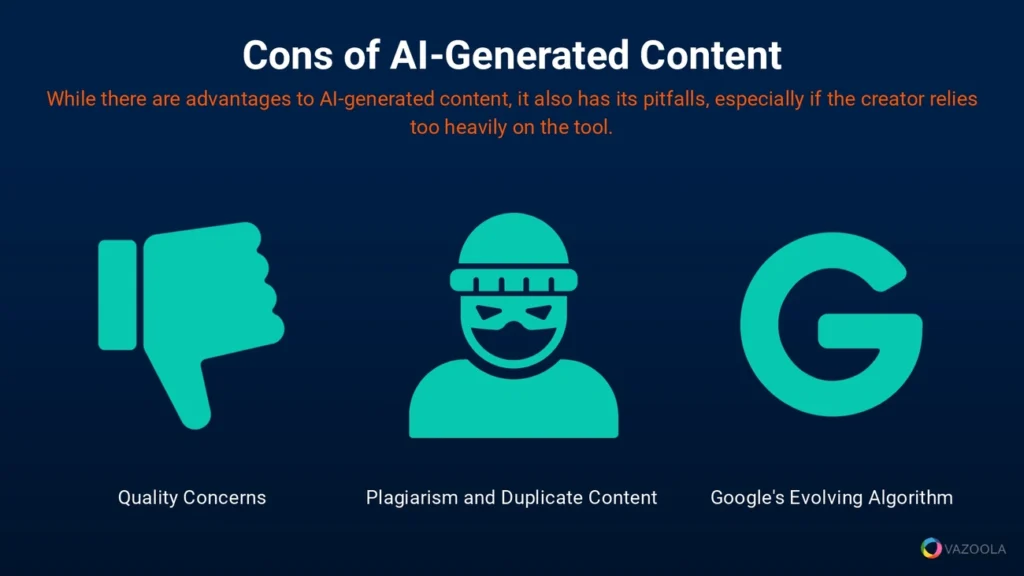
Image Source: Vazoola
In 2026, quality concerns have emerged as the Achilles’ heel of ai content strategy implementation. Numerous sites that initially saw gains from AI-generated content have experienced dramatic traffic collapses after Google’s quality updates targeted mass-produced, low-value content.
Thin Content from Over-Automation
The temptation to scale content production through automation has resulted in shallow articles that lack substance. Despite appearing polished on the surface, AI-generated content often delivers minimal value beyond what already exists online. This “C-level content” might occasionally rank well but typically attracts minimal traffic due to targeting low-volume keywords.
One study documented the fallout: websites like Casual (with 1,800 AI-generated articles) and TailRide (with 22,000 AI-generated pages) were completely deindexed by Google. ZacJohnson.com went from 8.2 million monthly visits to zero after publishing approximately 60,000 AI-generated articles. In March 2024, Google’s search update specifically targeted AI-generated “copycat content” with expectations to reduce unhelpful, low-quality content by 40%.
Lack of Topical Authority in AI-Generated Articles
Topical authority—a site’s recognized expertise and comprehensive coverage of a specific subject—has become crucial for search success. Unlike simplistic keyword optimization, topical authority signals to search engines that your site is a go-to resource for an entire topic, not just individual keywords.
However, AI struggles to build this authority for several reasons:
It aggregates and regurgitates existing information without adding original value
It lacks the ability to challenge assumptions or introduce novel perspectives
It cannot provide first-hand experiences or demonstrate real expertise
Search engines can detect when websites prioritize publishing volume over substance, producing surface-level coverage that algorithms easily identify as thin content. This approach fails to demonstrate the deep, holistic understanding necessary for topical authority.
Failure to Address E-E-A-T Guidelines
Google’s E-E-A-T guidelines (Experience, Expertise, Authoritativeness, Trustworthiness) represent a fundamental challenge for generative ai seo strategy implementations. Google’s ranking systems specifically aim to “reward original, high-quality content that demonstrates qualities of E-E-A-T“.
Unfortunately, AI content typically falls short in critical areas:
Experience: AI cannot have actual experiences—it cannot visit a location, use a product, or recover from an injury
Expertise: AI lacks the years of study, practice, and real-world application that constitutes genuine expertise
Authoritativeness: AI-generated content has no identifiable expert with credentials or reputation
Trustworthiness: AI exists in an accountability vacuum with no expert standing behind its claims
To succeed with ai seo optimization in 2026, organizations must recognize that “AI can be a great assistant, but it won’t make your website rank”. A strategic approach requires human expertise at every stage—from planning and research to writing, editing, and fact-checking—to create content that truly satisfies both users and search engines.
🚀 Save 10 Hours Per Week on Content Creation
Stop wasting time on manual content creation. Runnwrite AI generates perfect social media posts AND SEO blog articles automatically.
On-Page Optimization Gaps in AI-Driven Workflows
Technical SEO fundamentals often get overlooked in the rush to implement ai seo strategy solutions. Even as organizations focus on content generation, they frequently neglect critical on-page optimization elements that search engines use to understand and rank pages.
Missing Contextual Relevance in Metadata
Title tags remain one of the simplest yet most effective SEO levers, yet they’re frequently mishandled in AI-driven workflows. Many websites damage their rankings by targeting incorrect keywords, omitting variations, or using generic templates. This problem compounds at scale—particularly for large sites with similar product variants and local landing pages, where AI often defaults to basic templates like “{Category} – {Brand} in {City}”.
Alignment between metadata and content is crucial for ai seo optimization. When AI systems detect consistency across title tags, headings, body content, and structured data, confidence increases—along with citation chances in AI-generated results. Indeed, in one recent case study, simply adding “& [keyword]” to an existing homepage title tag significantly boosted rankings and impressions without changing anything else.
Poor Internal Linking Structures
AI-generated content often creates orphan pages—webpages with no internal links pointing to them from anywhere on the site. These isolated pages miss out on link equity from other pages and may not even get indexed by search engines. For generative ai seo strategy to succeed, important pages should be no more than three clicks away from the homepage.
Another common issue involves unnatural or forced internal links that disrupt content flow. These misaligned links damage SEO by:
Diluting topical relevance when links feel irrelevant
Disrupting reader engagement and interrupting content flow
Reducing user trust when links appear out of place
Inconsistent Heading Hierarchies
AI tools frequently generate illogical heading structures that confuse both users and search engines. Proper headings create a roadmap for content, helping visitors find information quickly while enabling search engines to understand page structure. Unfortunately, many ai content strategy implementations make fundamental mistakes like skipping heading levels (jumping from H1 to H3) or using multiple H1 tags.
For sites utilizing ai and seo strategies together, heading hierarchy directly impacts accessibility as well. Screen readers rely on heading structure to help users with visual impairments navigate content effectively. Clean, consistent heading structures signal both topic importance and organization, enabling better crawling efficiency and improved user experience in ai era seo strategy implementations.
AI and SEO Strategies That Ignore User Experience
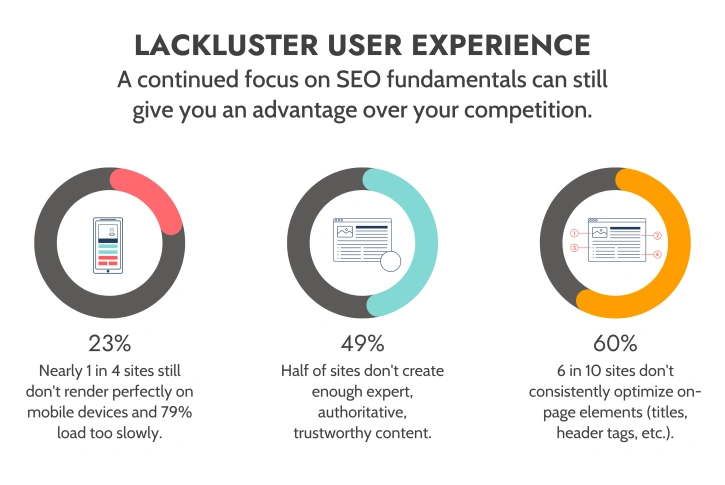
Image Source: Workshop Digital
User experience often takes a backseat in current ai seo strategy implementations. As organizations rush to implement sophisticated AI solutions, they frequently overlook the human element that drives engagement and conversions.
Low Engagement from Generic Personalization
Despite significant investments in AI personalization, many users still feel they’re “just another face in the digital crowd”. This ironic disconnect emerges as technology advances—the more sophisticated the AI, the more robotic the experience often becomes. Off-the-shelf AI models frequently fail to capture the unique nuances of a brand’s voice or audience characteristics, resulting in irrelevant or awkward recommendations.
According to research, customers crave personalization and can instantly identify generic approaches with no dynamic content. Unfortunately, many ai content strategy implementations rely on one-size-fits-all approaches that prioritize algorithmic preferences over genuine user intent. The results speak for themselves: generic pitches fail to address specific pain points, lack emotional connection, and ultimately drive away potential customers.
Slow Page Load from Overloaded AI Widgets
Page speed remains a critical factor for both SEO and user experience. Slow-loading pages frustrate users, increase bounce rates, and damage search rankings. Nevertheless, many ai and seo strategies overlook this fundamental aspect.
A one-second delay in page response can result in a 7% reduction in conversions. Similarly, approximately 25% of users will abandon websites loading longer than 4 seconds. AI widgets, especially those poorly implemented, add unnecessary load time—some adding between 30ms to 100ms per widget. For sites with multiple AI tools, these small delays compound into significant performance issues.
The temptation to add sophisticated AI features often comes at the cost of speed. Businesses frequently implement AI chatbots, recommendation engines, and personalization widgets without considering their cumulative impact on page performance.
Neglecting Mobile-First Indexing Signals
With over 60% of internet traffic now occurring on mobile devices, ignoring mobile optimization significantly hinders search visibility. Nevertheless, many ai era seo strategy implementations focus primarily on desktop experiences.
Google uses the mobile version of a site for indexing and ranking—an approach called mobile-first indexing. This means having the same content on mobile and desktop versions, proper structured data on mobile pages, and optimized images for smaller screens.
For generative ai seo strategy to succeed in 2026, organizations must recognize that mobile optimization isn’t optional—it’s essential for ai seo optimization. A mobile-friendly site isn’t just about smaller screens; it requires fast loading speed, easy navigation, and delivering the same quality content users expect from desktop.
Fixing AI SEO Strategy: What Works in 2026
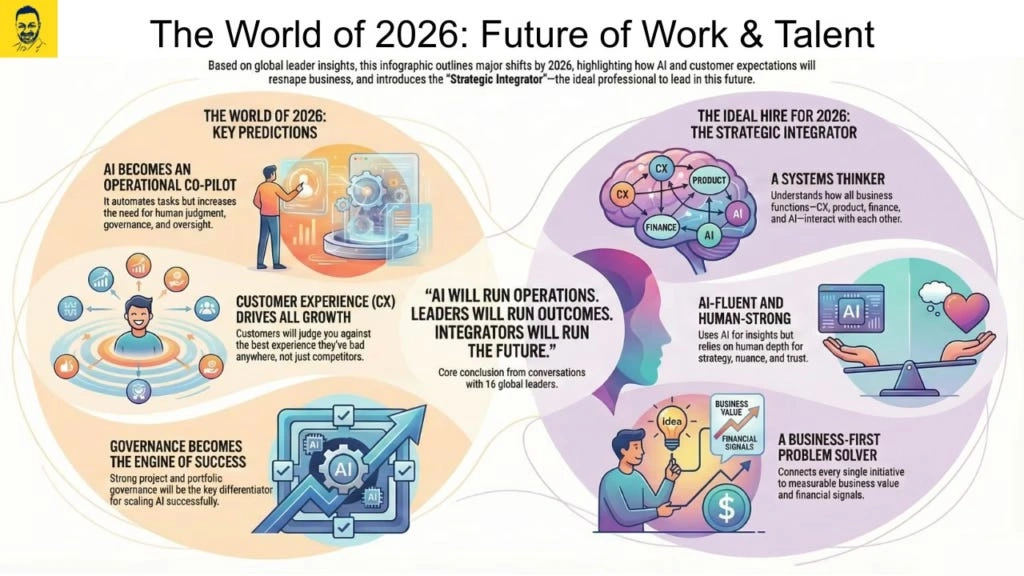
Image Source: Medium
Successful ai seo strategy in 2026 requires finding the perfect balance between automation and human expertise. Given that 96% of AI/ML practitioners believe human labeling is important, with 86% considering it essential, businesses must evolve beyond fully automated approaches.
Human-in-the-Loop Content Review Systems
Human-in-the-Loop (HITL) fundamentally transforms AI workflows by integrating human expertise at critical checkpoints. This approach doesn’t replace AI but enhances its capabilities through strategic human intervention. Effective HITL systems require mapping your content lifecycle to identify where human judgment is non-negotiable.
The most critical step involves having Subject Matter Experts review AI-generated content exclusively for factual accuracy, completeness, and technical nuance. Furthermore, implementing quality assurance processes where experts regularly review samples of AI outputs ensures consistent quality.
Prompt Engineering for Better AI Output
Prompt engineering has emerged as the secret weapon for maximizing AI’s potential in ai content strategy. Properly structured prompts transform generic AI responses into targeted SEO recommendations by providing clear context and instructions.
Four key components for effective SEO prompts include:
Clear instructions (like “write a blog intro from first-person perspective”)
Detailed context about target audience or search intent
Relevant input data for processing
Output indicators such as word count or format specifications
Advanced techniques such as the persona pattern help pack multiple instructions into one sentence, substantially improving the quality of generative ai seo strategy outputs.
Combining Predictive Analytics with Manual QA
The integration of predictive analytics with human verification creates particularly powerful ai and seo strategies. AI dramatically improves SEO performance measurement by processing vast amounts of data simultaneously and identifying patterns human analysts would miss.
For optimal results in ai era seo strategy, define clear success metrics and establish comprehensive data collection systems. Prior to implementation, create systematic testing procedures with hypothesis-driven frameworks that isolate the impact of specific optimizations.
Throughout this process, teams should track effectiveness using KPIs like human review time, error reduction rates, or the percentage of AI outputs requiring correction. Ultimately, this hybrid approach ensures you get the speed of AI while maintaining the quality, accuracy, and strategic insight that only human experts can provide.
Future-Proofing Your AI SEO Strategy
Building sustainable ai seo strategy requires forward-thinking approaches that adapt to evolving search environments. For long-term success, organizations must consider technical infrastructure alongside ethical considerations.
Integrating Generative AI with Structured Data
Structured data serves as a translation layer between your content and AI systems. Schema markup provides explicit clues about meaning and relationships between entities on your pages, enabling semantic understanding. This approach transforms websites from flat text documents into Entity Homes—central hubs connecting related sub-intents. Schema implementation unlocks rich results and potentially influences how content appears in AI-generated summaries.
Using AI for Real-Time SERP Monitoring
Real-time search engine results monitoring offers immediate insights for swift tactical adjustments. SERP tracking solutions provide clean, structured data about organic results, ads, local packs, and other SERP features. This continuous monitoring functions as an early warning system—sudden ranking fluctuations can signal negative impacts from algorithm updates, penalties, or technical issues. Through this approach, you can identify problems before significant traffic losses occur.
Building Ethical and Transparent AI SEO Pipelines
Ethics form the foundation of sustainable ai content strategy. Implementing transparency means clearly communicating when AI algorithms are utilized. Establishing governance frameworks provides direction for responsible AI implementation while ensuring data protection. Furthermore, maintaining human oversight prevents misuse and ensures validation of AI-generated content. This commitment to ethical practices builds trust with both users and search engines.
Conclusion
Throughout this article, we’ve examined why many AI SEO strategies fall short despite massive investment and technological advancement. The evidence clearly shows that AI tools alone cannot deliver sustainable search success without human oversight. Certainly, the fundamental issues—overreliance on automation, lack of human judgment, misalignment with search intent, and failure to address E-E-A-T guidelines—continue to undermine even sophisticated AI implementations.
The path forward requires balance rather than blind automation. First, businesses must implement human-in-the-loop systems where subject matter experts validate AI outputs for accuracy and relevance. Second, strategic prompt engineering transforms generic AI responses into powerful SEO assets. Third, combining AI’s analytical capabilities with human quality assurance creates reliable content pipelines that satisfy both algorithms and users.
Companies that succeed with AI SEO in 2026 will embrace this hybrid approach. They understand that AI excels at processing vast datasets while humans provide the creativity, contextual understanding, and ethical judgment machines lack. This partnership between technology and human expertise ensures content maintains authenticity, addresses actual user needs, and builds genuine topical authority.
The future belongs to organizations that view AI as an enhancement to human capabilities, not a replacement. Real SEO success comes from respecting both technological potential and human wisdom. Together, these complementary forces create search experiences that genuinely serve users while achieving sustainable business outcomes.