

Did you know that automated local SEO is becoming essential as almost half of all local searches result in a visit within a day?
In our experience working with small businesses, I’ve seen about 10-15% more calls come through Google Business Profile compared to pre-AI times. Actually, with AI-powered search experiences reshaping how consumers find local businesses, the traditional SEO approaches are quickly becoming outdated. However, many business owners still wonder if SEO can be automated effectively while maintaining quality results. The answer is yes—SEO that works doesn’t have to be entirely manual anymore.
Local businesses specifically need automated local SEO tools to stay competitive as more customers use platforms like ChatGPT, Perplexity, and Claude to search for products and services in their area. In fact, GBP has overtaken organic search for phone calls by a margin of about 12%, making it clear that automated local SEO software is no longer optional. Additionally, a 2023 study found that 62% of consumers would not use a business if they found incorrect information about them online, which is why a local SEO step by step approach is crucial for your business survival.
Throughout this guide, we’ll show you exactly how to leverage automation while still maintaining the personal touch that makes your local business unique.
Table of Contents
Why Local SEO Still Matters in the Age of AI

Image Source: Nzouat
Despite rapid changes in search technology, local SEO remains a cornerstone of digital marketing success. The strategies might evolve, but understanding why local optimization matters helps small businesses navigate the AI-powered search landscape effectively.
Local search is more personalized than ever
The search landscape has fundamentally changed from simply adding keywords to your website. Today’s search engines understand user intent with unprecedented accuracy. Consequently, businesses using automated local SEO tools can adapt to these sophisticated algorithms more efficiently.
Almost 50% of all Google searches have local intent, and of those, nearly 90% are used to research local businesses. This represents an enormous opportunity for companies implementing local SEO step by step strategies.
Google determines local rankings through three primary factors: relevance, distance, and prominence. Relevance measures how well your business matches what someone searches for. Distance calculates how far each potential result is from the searcher’s location. Prominence evaluates your business’s reputation and visibility online. Essentially, these factors work together to deliver highly personalized results to each user.
Furthermore, searches are becoming increasingly conversational. Rather than typing “pizza Chicago,” users now ask, “What’s the best deep-dish pizza place within walking distance of my downtown hotel?” This shift demands more sophisticated automated local SEO approaches.
AI-powered SERPs reduce organic clicks
One significant challenge in the current search environment is the decline in organic click-through rates. According to recent studies, AI Overviews reduce clicks by an average of 34.5% for the first organic search result. For businesses relying solely on traditional organic rankings, this represents a substantial threat.
Some industries have reported up to 64% declines in organic traffic due to AI-generated answers. This phenomenon, sometimes called the “alligator graph” (rising impressions but falling clicks), affects websites across numerous sectors.
Nevertheless, local searches show resilience against this trend. Searches with clear local intent rarely trigger AI Overviews because they typically lead to actions (calls, visits, appointments) rather than just information gathering. This makes seo that works for local businesses different from general informational content strategies.
Google Business Profile is still your best asset
Above all, your Google Business Profile remains the most powerful asset in your local SEO arsenal. As generative AI increasingly relies on structured data sources, a complete GBP has become even more critical.
GBP significantly influences all three local ranking factors:
Relevance through accurate business categories and descriptions
Distance verification through confirmed address information
Prominence via reviews, photos, and regular updates
Notably, GBP is now considered the single most powerful Answer Engine Optimization asset for local businesses. When AI platforms like ChatGPT or Perplexity answer local queries, they primarily pull information from structured sources like Google Business Profiles.
At the same time, automated local SEO software can help maintain consistency across your digital footprint. This consistency matters because AI models don’t generate original local knowledge—they aggregate and summarize data from platforms like Google, Yelp, and TripAdvisor.
For this reason, investing in can SEO be automated solutions for maintaining your GBP and other local directories offers the best return on investment in the age of AI search.
✨ Create Social Media Posts & SEO Blog Articles with AI
Runnwrite AI is your all-in-one content creation platform. Generate engaging social media posts for Instagram, LinkedIn, Facebook, TikTok & YouTube PLUS SEO-optimized blog articles in seconds.
How AI is Reshaping Local SEO Strategies
Image Source: Simply Be Found
The local search landscape has dramatically evolved with artificial intelligence becoming a central force reshaping how customers find businesses near them. Understanding these changes is critical for implementing automated local SEO strategies that actually deliver results.
Zero-click results and voice search
The traditional customer journey has compressed significantly as AI reshapes search behaviors. Between April 2024 and March 2025, AI chatbots saw 55.2 billion visits – an 80.92% year-over-year increase. This shift has serious implications for your visibility.
Zero-click searches now dominate the landscape:
58.5% of U.S. searches end without a click
59.7% of E.U. searches conclude without website visits
Local packs deliver instant gratification with maps, hours, and reviews without requiring website visits
Voice search likewise transforms how customers discover businesses. Nearly 58% of consumers use voice to find local business information, with 58% of mobile device owners using voice search to seek local businesses at least occasionally. Moreover, these voice queries are inherently different – they’re conversational and similar to natural speech patterns.
AI-generated answers and summaries
Google’s AI Overview has fundamentally restructured search results, claiming the premium “Position 0” real estate on the results page. These AI-generated summaries appear for 13.14% of all queries as of March 2025, up from just 6.49% in January.
The impact on local businesses is substantial. When an AI Overview appears and your content isn’t cited, organic click-through rates can plummet by as much as 61%. Success is no longer defined by securing the top organic position but by achieving inclusion within these AI-powered summaries.
For high-intent local queries like “best walking tour in Chicago,” the AI often replaces the traditional Google 3-Pack with an expanded, enhanced local display including Google Business Profile cards. Therefore, local SEO step by step approaches must now prioritize optimization for these AI-generated results.
The rise of smart assistants and predictive search
Presently, smart assistants shape more than half of daily queries. These AI-powered tools don’t just crawl your website – they interpret language, infer meaning, and construct your brand’s identity across the entire web.
Unlike traditional search engines, smart assistants personalize results based on weather, time, location patterns, purchase history, and search preferences. This creates an environment where automated local SEO software becomes essential for maintaining consistent information across all platforms.
Smart assistants also introduce predictive capabilities, anticipating a user’s entire “information journey” by mapping potential subsequent inquiries. This interactive mode negates the need for users to click through for additional information.
The shift toward SEO that works in this new environment requires businesses to focus on structured data, predictive content, and strong topical authority. With voice-commerce forecasts showing over 32% of local searches will convert directly through smart assistant prompts, implementing automated local SEO tools is no longer optional but essential for survival.
Top Automated Local SEO Tools to Know
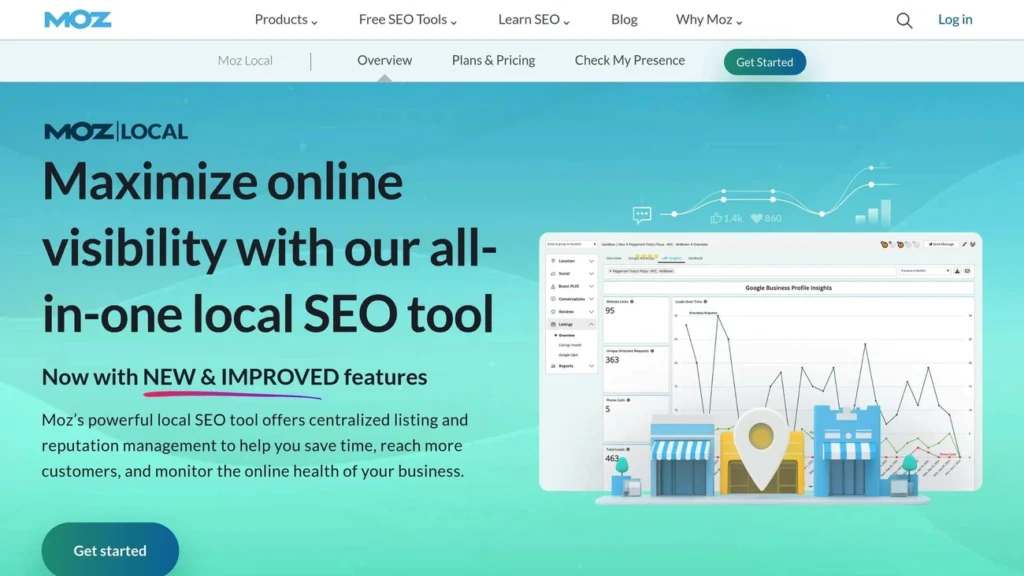
Image Source: SearchX
Selecting the right automated local SEO tools can dramatically simplify how you maintain and improve your online presence. Here’s a breakdown of the most effective platforms that deliver SEO that works for small businesses without requiring technical expertise.
BrightLocal for citation management
BrightLocal stands out as a comprehensive citation management solution that addresses one of local SEO’s most time-consuming tasks. Indeed, their research shows that 31% of the first ten organic results for local-intent searches are business directories. This makes citation building an essential component of any local SEO step by step approach.
The platform operates differently from one-size-fits-all solutions by offering:
Industry-specific listings across 40+ verticals
Complete ownership of all created listings (with login details provided)
Automatic citation auditing to identify existing listings
Data Aggregator Networks that distribute your information to hundreds of directories
Primarily designed for affordability, BrightLocal offers citation building starting at USD 2.00 per site, making it accessible for small businesses with limited marketing budgets.
SurferSEO for content optimization
SurferSEO provides data-driven insights for creating locally-optimized content that ranks. Altogether, the platform analyzes why top pages rank well for specific keywords through correlation SEO.
The tool’s Content Editor compares your content structure, keyword usage, and phrasing against high-ranking competitors. Hence, you receive customized recommendations on word count, topics to cover, and NLP-optimized phrases to include – essential elements for automated local SEO software success.
Jasper and ChatGPT for content creation
For businesses lacking dedicated content writers, AI writing tools like Jasper and ChatGPT offer remarkable efficiency. Certainly, these platforms excel at generating both short-form content (social media posts, Google Business Profile updates, captions) and long-form content (blog posts, articles, service pages).
Although automated content creation requires human oversight, these tools effectively transform your team into editors rather than creators. This approach makes can SEO be automated a realistic possibility for small businesses with limited resources.
Moz Local for NAP consistency
Moz Local specializes in maintaining NAP (Name, Address, Phone) consistency across the web. Inconsistent NAP information undermines local SEO efforts, as conflicting business details reduce Google’s confidence in displaying your information to searchers.
Starting at USD 14.00 monthly per location, Moz Local offers:
Data synchronization with Google, Facebook and other platforms
Duplicate listing detection and permanent removal
Profile completeness scoring
Real-time alerts for listing changes
In essence, these automated local SEO tools provide small businesses with enterprise-level capabilities at accessible price points, allowing you to compete effectively in increasingly AI-driven local search results.
🚀 Save 10 Hours Per Week on Content Creation
Stop wasting time on manual content creation. Runnwrite AI generates perfect social media posts AND SEO blog articles automatically.
Actionable Tips to Automate Your Local SEO
Image Source: Fantech Labs
Implementing automated local SEO saves valuable time that small business owners can redirect toward serving customers. By strategically automating routine tasks, you’ll maintain visibility without sacrificing quality or personal touch.
Automate review requests and responses
Review management platforms offer remarkable efficiency gains through automation. With the right software, review monitoring becomes a 24/7 process instead of a manual task. These tools send automated review requests via both SMS and email immediately after customer interactions, ensuring a steady stream of new feedback.
For responses, advanced systems analyze each review’s content and sentiment before crafting personalized replies that match your brand voice. Particularly helpful is how good automation handles routine positive reviews automatically while flagging negative or complex feedback for your personal attention. This approach ensures you’re responding faster (which Google’s algorithm appreciates) without spending your entire day writing review responses.
Use AI to generate schema markup
Schema markup provides search engines with structured data about your business, yet implementing it manually can be daunting. Fortunately, numerous free online tools can generate JSON-LD code by simply filling out a form. Plus, if you use WordPress, plugins can automatically create schema markup.
Initially focus on LocalBusiness schema—it’s the foundation for improved regional AI visibility. This structured data teaches AI precisely what your business offers, where it’s located, and its operating hours. Such clarity is especially vital for voice search queries like “find me a bakery open now near the park”.
Create micro tools for local link building
Link building automation requires creative approaches. Make it effortless for customers to leave reviews by offering incentives—perhaps a discounted service for reviewers. Subsequently, highlight these testimonials across your social platforms, which both generates content and encourages others to share their thoughts.
Keep listings updated across platforms
Manually updating business listings across multiple directories wastes time and introduces error risks. Instead, utilize platforms that automatically update information across multiple directories from a single dashboard. Such tools connect directly to your Google Business Profile to sync changes automatically.
Most compelling evidence shows that listing management software can detect and remove duplicate listings while allowing you to review and manage user-suggested edits. This consistency matters tremendously since AI models evaluate your entire digital footprint, not just your website.
How to Future-Proof Your Local SEO Strategy
As AI and search evolve, future-proofing your automated local SEO strategy requires focusing on elements that machines can’t easily replicate. Let me share approaches that ensure your local business remains visible regardless of algorithm changes.
Build brand trust and authority
Strong brand authority means more than visibility—it represents your digital street credibility in a specific area. Nearly 75% of patients turn to online reviews first when selecting new healthcare providers, showing how reputation directly impacts search performance. Becoming an integral part of your community builds instant credibility; sponsor local events, collaborate with charities, or open special tabs for educators at local establishments. These activities create positive reputation signals that algorithms increasingly recognize as trust indicators.
Focus on user intent, not just keywords
Local search intent has fundamentally shifted beyond keywords to solving real problems. Users transition between different intent phases—navigational, informational, commercial, and transactional. Your automated local SEO software must match these various stages with appropriate content. Research shows successful local SEO step by step approaches start by identifying your customer base’s most prevalent intents through keyword research, surveys, and audience polling.
Combine automation with human oversight
While can SEO be automated is answered with “yes,” remember that AI systems write falsities with complete conviction. Implement clear review processes for all AI-generated content—create a matrix including brand tone, community relevance, and customer resonance. This human oversight ensures SEO that works long-term without damaging the authentic connection that builds customer trust.
Conclusion
Mastering automated local SEO represents a crucial step for small business owners aiming to thrive in today’s AI-driven search landscape. Throughout this guide, we’ve seen how local search has become increasingly personalized, making proper optimization more essential than ever. Google Business Profile still stands as your most valuable asset, especially as AI-powered search experiences reshape consumer behavior.
AI has undoubtedly transformed the local SEO playing field. Zero-click results, voice search, and smart assistants now dominate the customer journey, therefore requiring businesses to adapt their strategies accordingly. The rise of AI-generated answers and summaries means your business information must be accurate and consistent across all platforms.
Thankfully, powerful automated tools like BrightLocal, SurferSEO, Jasper, and Moz Local make implementing a comprehensive local SEO strategy much more manageable. These tools handle time-consuming tasks such as citation management, content optimization, and NAP consistency without requiring technical expertise.
Small business owners can take immediate action by automating review requests, generating schema markup, creating micro tools for link building, and keeping listings updated across platforms. These steps save valuable time while maintaining the visibility needed to attract local customers.
The future of local SEO belongs to businesses that combine automation with genuine human connection. Your strategy will remain effective despite algorithm changes when you build brand trust, focus on user intent beyond keywords, and maintain human oversight of all automated content.
Remember that successful local SEO isn’t just about technical optimization – it’s about creating authentic connections with your community while using powerful automation tools to handle repetitive tasks. Start implementing these strategies today, and you’ll position your small business for sustained local search success regardless of how AI continues to evolve.


